
A tour of CtrlPortals
The CtrlPortals demo vault is configured as a CRM system. This page walks through it in the order a user meets it: a dashboard, a customer, the tabs on that customer, the numbers behind the figures, and the calendar. Nothing on the tour is specific to CRM — the same modules sit on projects, cases or contracts.
Sign in to the demo vault as Tina Smith (TinaS). Nothing described here changes the
configuration, so it is safe to click through. The screenshots are dense; zoom in where a
detail matters.
For how the pieces fit together rather than what they look like, read About CtrlPortals.
Start at a dashboard
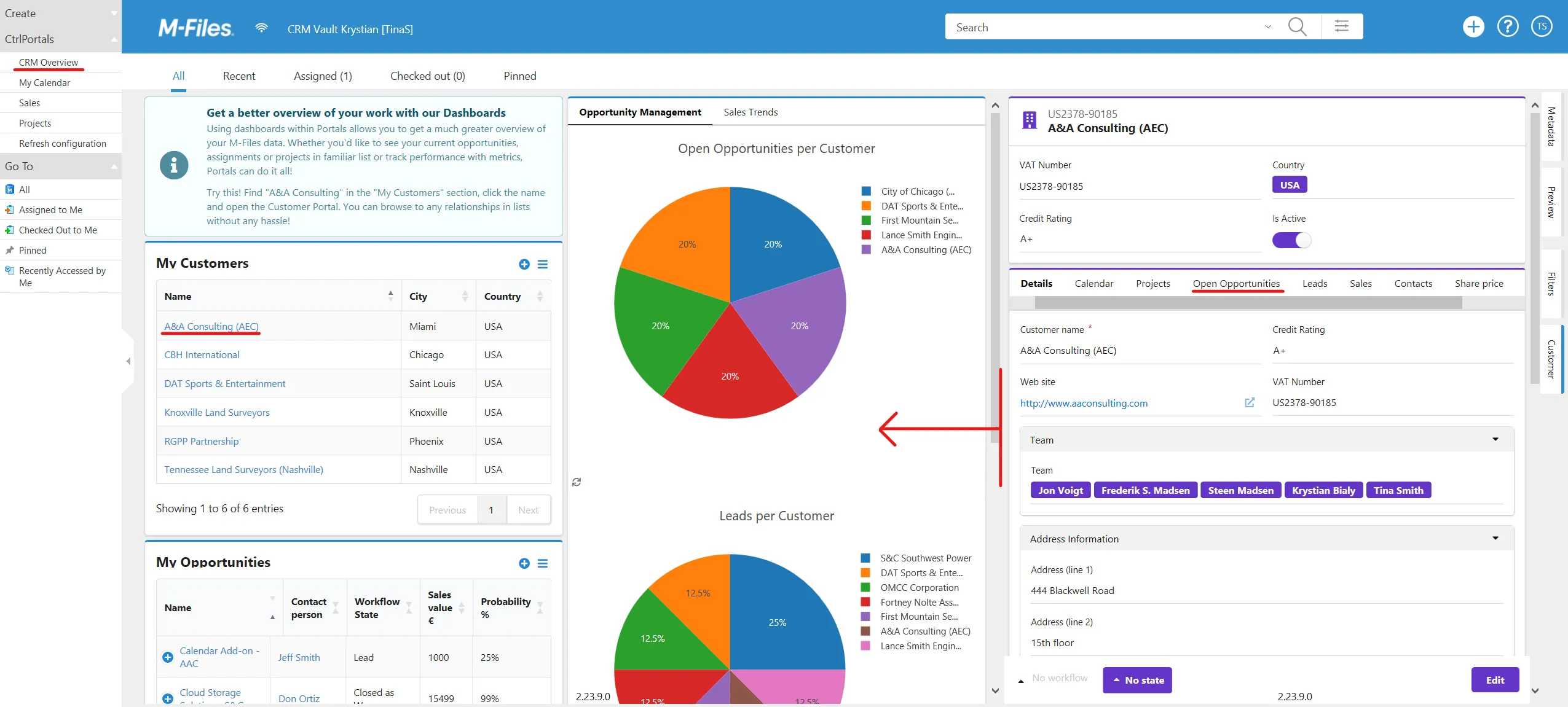
Section titled “Start at a dashboard”The CtrlPortals group in the left task pane lists the dashboards this user can open: CRM Overview, My Calendar, Sales and Projects, with Refresh configuration under them. A dashboard is not attached to an object, so it opens in the main pane and stays there while you move around the vault.
Open CRM Overview. It holds two lists — My Customers and My Opportunities — beside plots of open opportunities and leads per customer. This is the screen a salesperson would start the day on, and none of it required navigating a folder tree.
Open a customer
Section titled “Open a customer”In My Customers, single-click A&A Consulting (AEC). The name is a link to the object, and clicking it opens the customer’s portal in the right-hand pane without taking the dashboard away. Drag the border between the panes to the left when the portal needs the width.
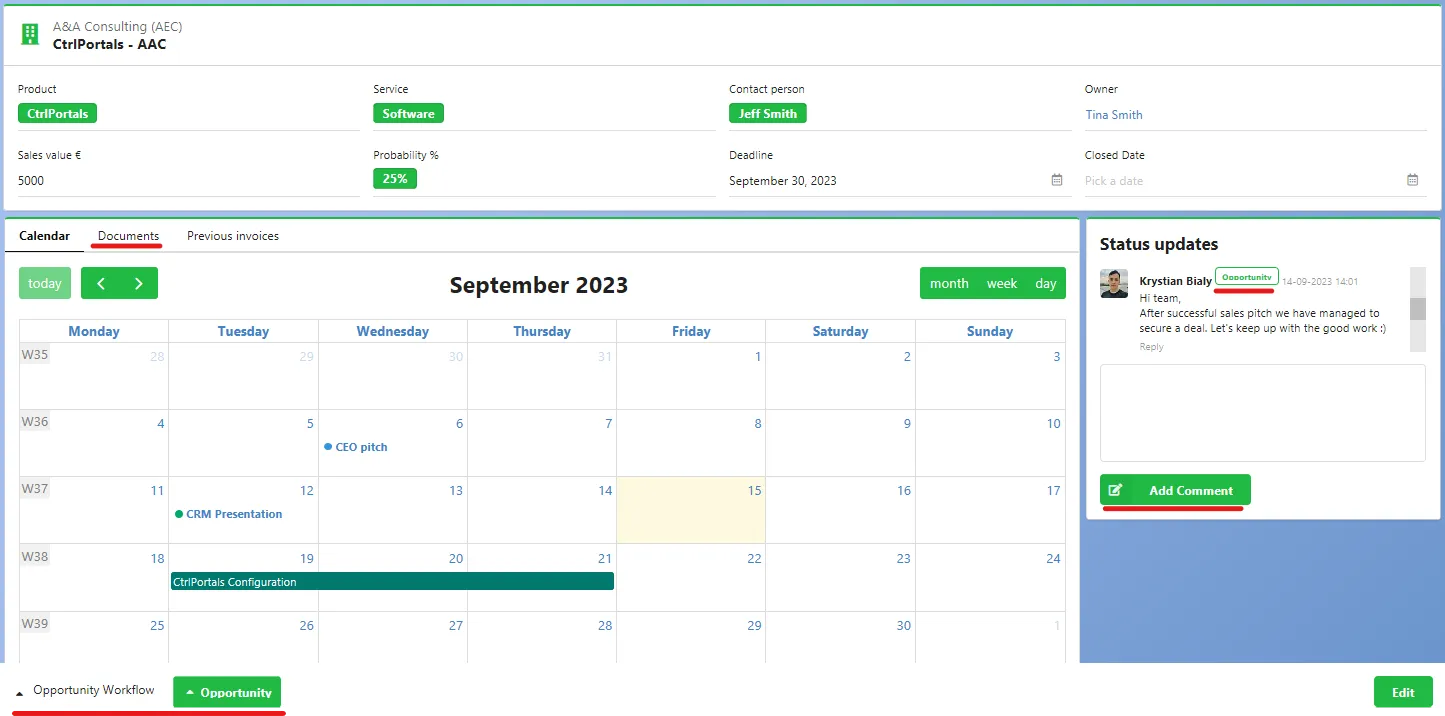
The portal shows the customer’s details, its related objects and its comments on one screen, instead of a tree to work down. Edit in the footer opens the details for changing, and the footer also carries the object’s workflow and current state. Everything a portal writes goes through normal M-Files permissions, so a user can only change what they could change on the metadata card.
Follow the tabs to related objects
Section titled “Follow the tabs to related objects”The row of tabs across the middle of the portal — Details, Calendar, Projects, Open Opportunities, Leads, Sales, Contacts, Share price, Key figures, Metrics — is one segment holding several, so a portal can carry more than fits on a screen. Work along it.
Open Opportunities lists the opportunities that point at this customer. Single-click one and it opens in its own portal: the same movement as from the dashboard to the customer, one relationship at a time.
Contacts lists the people at the customer, with a comment thread beside it. Comments here are
threaded rather than flat: reply to one, edit your own, and type @ to mention a colleague from
the vault’s users, which emails them where the vault has comment notifications turned on. An
edited comment is marked with an asterisk, so the record of who said what stays honest. A vault
with no Comment object type gets the M-Files version comments in the same place instead, each
one tagged with the workflow state the object entered — read-only, and flat. See
the Comments component reference for which
of the two a vault gets.
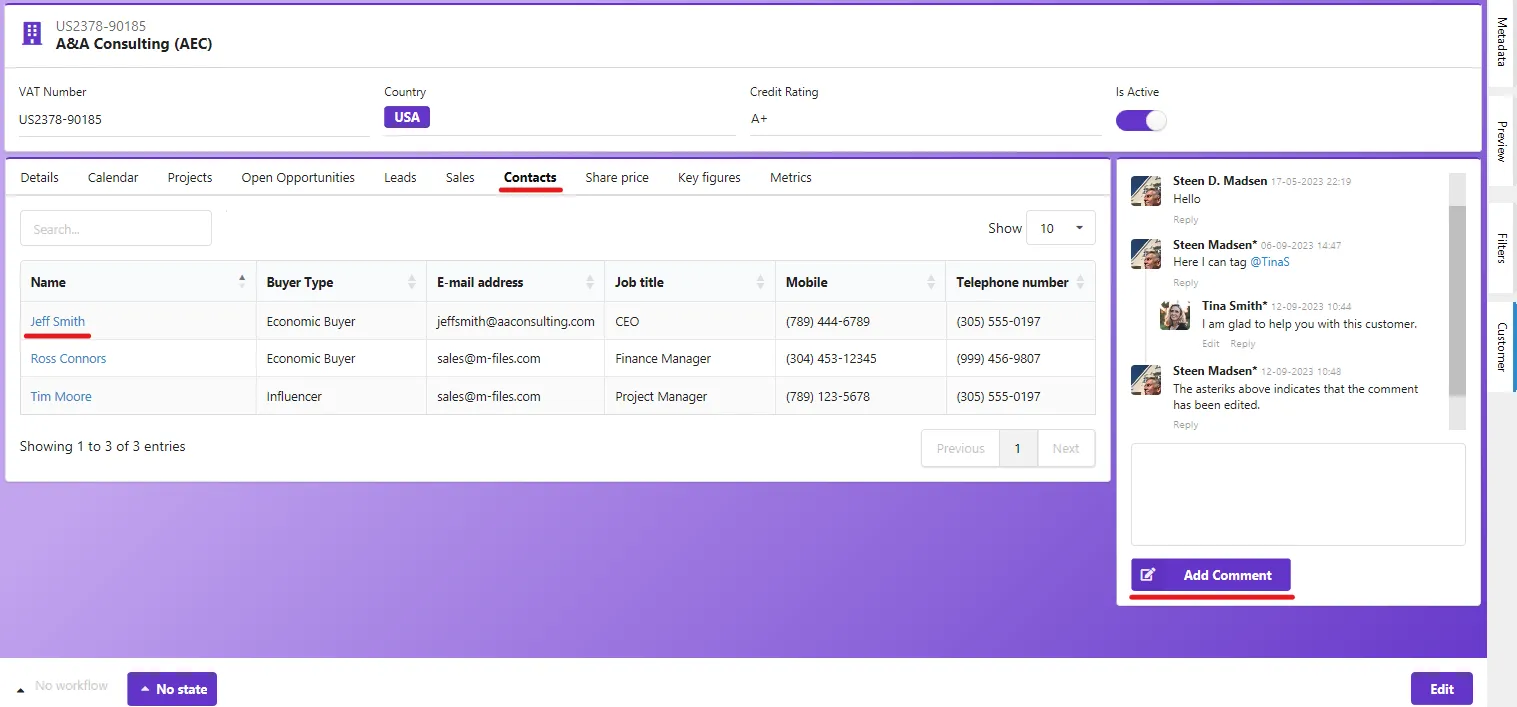
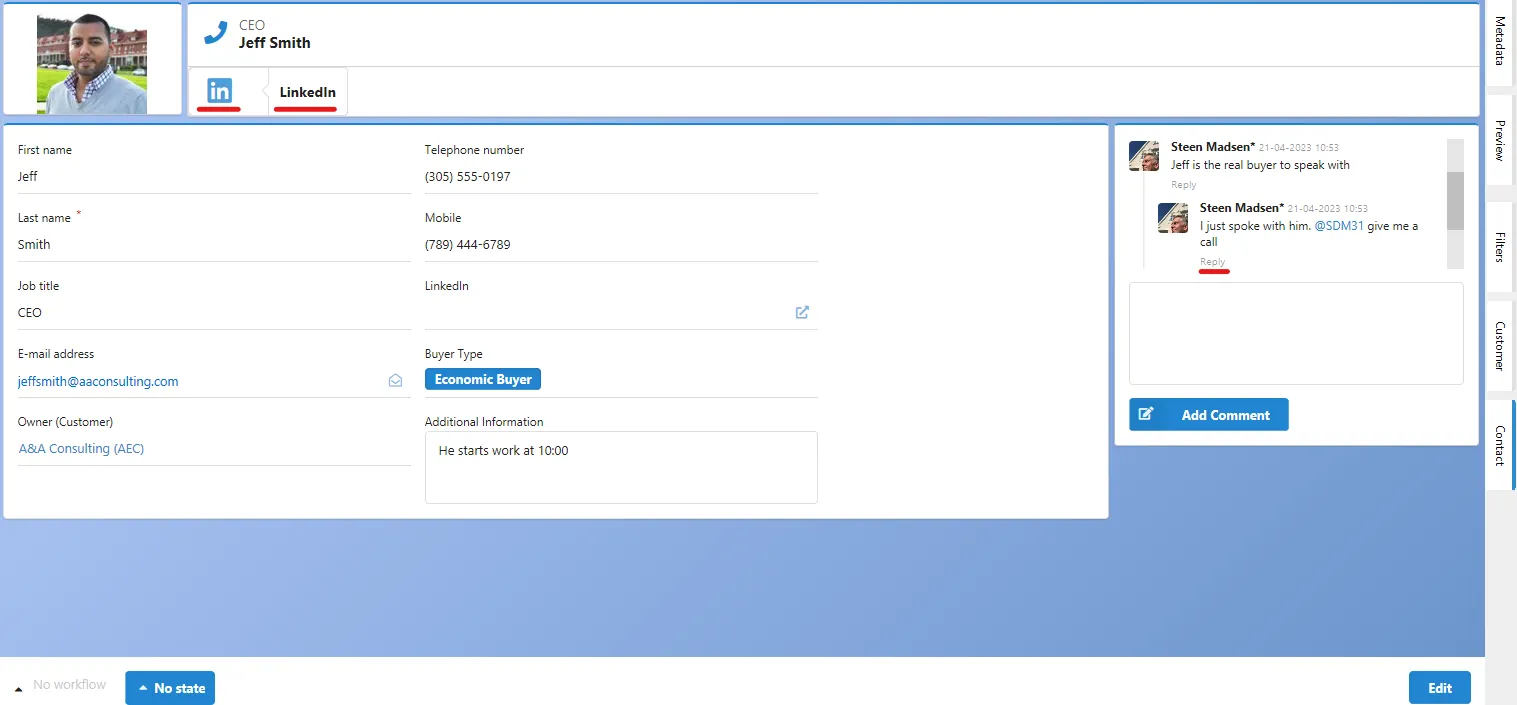
Single-click Jeff Smith to open his contact portal. His properties are laid out across two columns rather than the single column of a metadata card, and the LinkedIn button above them is an HTML module — arbitrary markup on a portal, with property values from the object substituted into it. The Share price tab back on the customer is another one.
Read the numbers
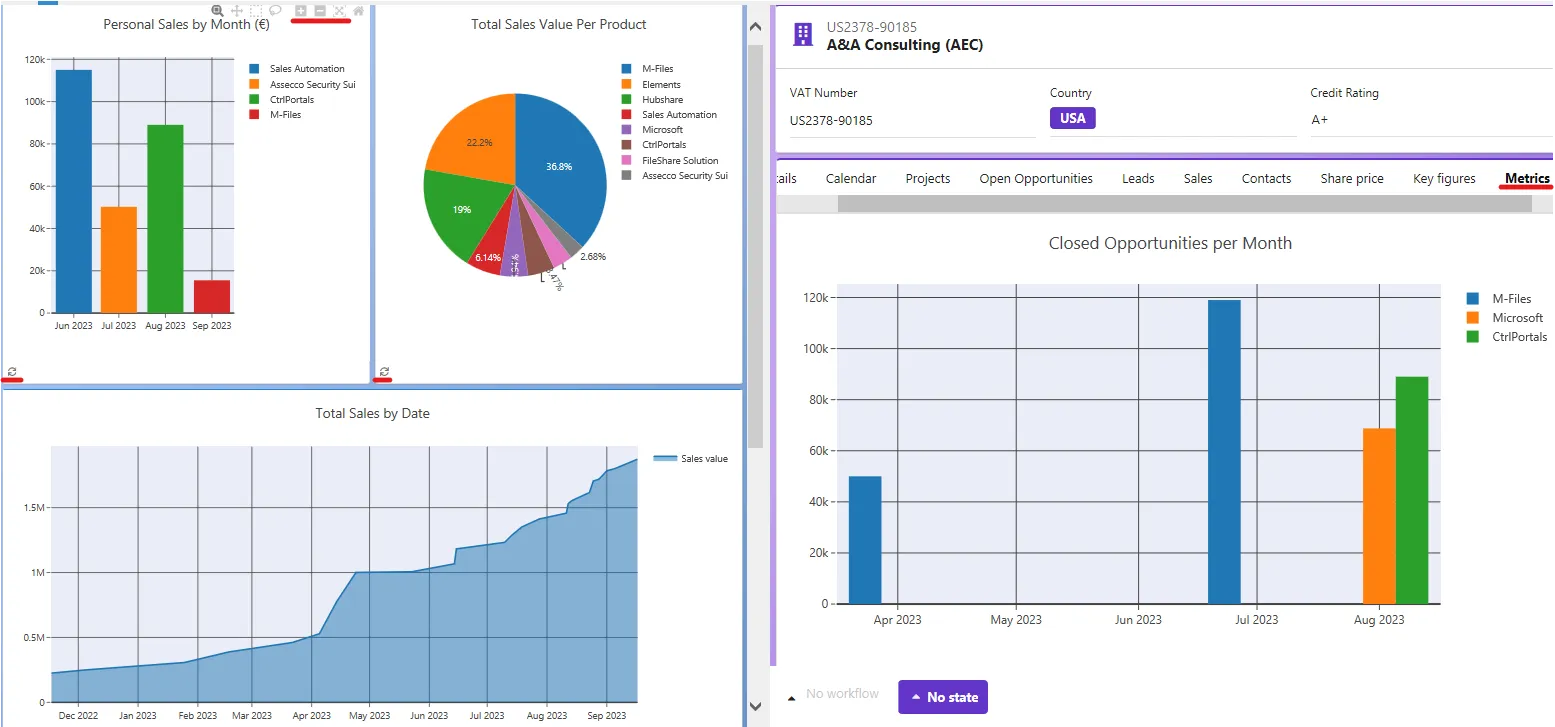
Section titled “Read the numbers”Open the Metrics tab on the customer portal, then open the Sales dashboard from the left pane so the two sit side by side. The tab shows this customer’s closed opportunities per month; the dashboard shows personal sales by month, sales value per product and the running total. One customer’s figures can then be read against the trend they belong to.
A plot is read from M-Files when it is displayed, so it is always current and never a copy. Clicking a data point drills into the objects behind it, and the refresh control on a plot clears the cached data and reads it again.
The calendar
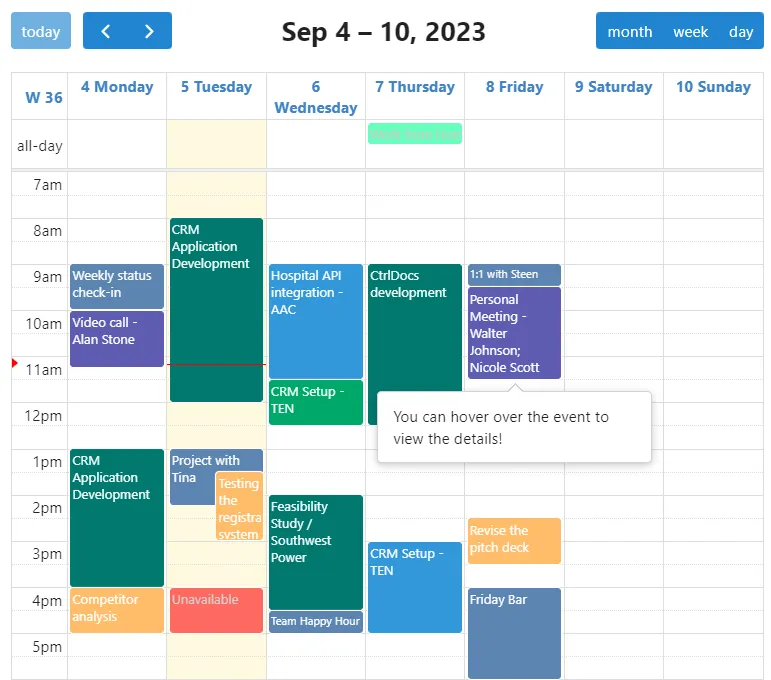
Section titled “The calendar”My Calendar, second in that menu, draws objects that have a start and an end as events. Dragging on an empty slot creates one and dragging an existing event moves it, neither of which opens a metadata card — though both still write through normal M-Files permissions.
A calendar holds several event types at once, and each event type says which properties supply the title, the colour and the hover text. That is why the week below reads as a week rather than as a list of objects: the colour tells you what kind of event it is, and pointing at one shows the detail without opening anything.
Where to go next
Section titled “Where to go next”- Follow a calendar through the demo vault takes one meeting from the opportunity it belongs to through to the three calendars that show it, and ends with the configuration behind the demo.
- About CtrlPortals explains how portals, segments and modules fit together, and what the product deliberately does not do.
- Configuration has every setting behind what is on this page, generated from the shipping application.